

US SCS activity drives $61bn insured nat cat total for H1’24: Gallagher Re
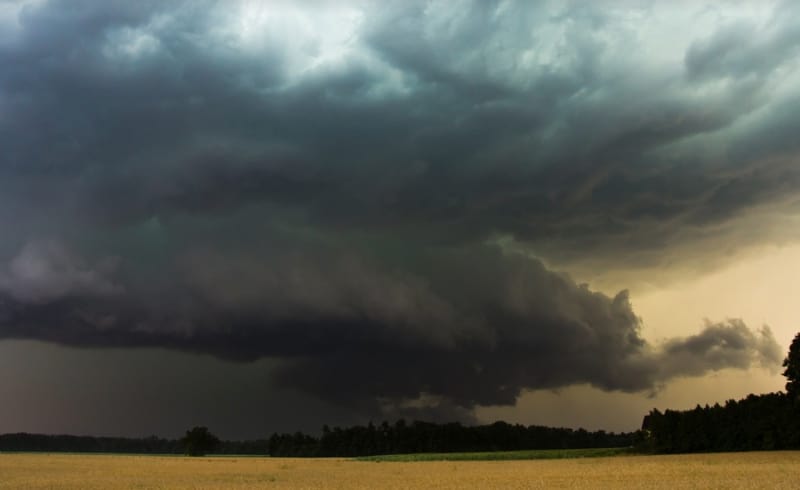
Global insurance and reinsurance industry losses from natural catastrophes in the first half of 2024 reached at least $61 billion, coming in 25% higher than the first half decadal average on the back of the second costliest H1 on record for the US severe convective storm (SCS) peril, according to reinsurance broker Gallagher Re.
Although H1 2024 insured losses beat the decadal H1 average, total H1’24 economic losses were estimated at $128 billion by the broker, which is slightly lower than the decadal average of $133 billion. The economic and insured loss totals suggest a global protection gap of $67 billion for the period, with roughly 48% of nat cat losses covered by insurance.
Gallagher Re’s H1 2024 Natural Catastrophe and Climate Report shows that US SCS activity continues to be the main driver of global insured losses from nat cats, accounting for at least $37 billion, or 61% of total H1’24 insured losses. According to the broker, this makes it the second costliest US SCS H1 total on record behind last year’s $47 billion.
Revealing just how impactful the peril has become for re/insurers, Gallagher Re finds that US SCS insured losses during the past 18 months actually exceeded $100 billion, making it the costliest two-year period ever for the peril.
After years of heavy losses and poor results, reinsurers moved away frequency type losses such as US SCS, with primary insurers now retaining the large majority, if not all of the losses from these events. This, says Gallagher Re, continues to put strain on insurers.
Steve Bowen, Chief Science Officer, Gallagher Re, said: “There was no shortage of meaningful storylines for natural catastrophes to start 2024, but the record-setting cost of US thunderstorm activity remains an incredibly important story to tell. Surpassing $100 billion in insured losses within an 18-month span confirms that SCS should no longer be treated as a non-peak peril for the industry. This staggering sum gives emphasis to the critical importance of promoting proactive mitigation investment in this increased environment for destructive thunderstorms — before the next major disaster occurs.
“As we shift to the rest of the year, the transition to La Niña will not only influence Atlantic hurricanes but also bring more extreme weather volatility to various regions of the world and with it, difficult challenges to many communities around the globe. It’s important to note, the fundamental premise of insurance is to help people in their time of need, and the reinsurance industry is well positioned and capitalized to deliver on that need.”
While insurance industry losses from Hurricane Beryl are expected to be manageable for the re/insurance sector, with current estimates ranging from $2.5 billion to $4.5 billion, Gallagher Re notes that the characteristics of the storm has raised concerns for the remainder of the Atlantic hurricane season, which runs through November.
Additionally, the report highlights that H1’24 was the warmest for the world on record dating to 1850, with June 2024 becoming the 13th consecutive month of record global temperatures.
“The impact of such heat could lead to further melting of ice sheets, increase the intensity of tropical cyclones, and make local heatwaves more frequent and severe,” warns Gallagher Re.
The post US SCS activity drives $61bn insured nat cat total for H1’24: Gallagher Re appeared first on ReinsuranceNe.ws.